
Chapter One
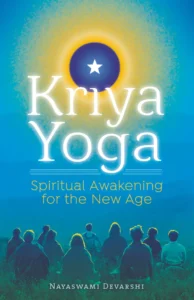
Kriya Yoga: Spiritual Awakening for the New Age
“Outward ritual cannot destroy ignorance because they are not mutually contradictory.”
— Paramhansa Yogananda, Autobiography of a Yogi, quoting Adi Shankara from his Century of Verses
I was raised in a religion that featured primarily outward rituals. My experience is, I suspect, true for many people living today, whatever their religion. Perhaps you, dear reader, share my early lack of enthusiasm for performing practices to an unknowable God somewhere “up there.” I was unconvinced by the promise of an unseen heaven and future salvation, given as a reward for following that religion.
As a child, the ways of this world seemed foreign to me. I was fortunate to have an identical twin brother who shared my otherworldly perspective. I still delight in the memory of the summers we spent roaming the vast forest just behind our home. When it came time to enter kindergarten, we were horrified by the prospect of being caged in school rooms for years of formal education. When the dreaded day arrived, we supported each other in refusing to enter school. Of course, we were forced to face the inevitable, though we stubbornly held out for several days.
The church we were raised in, the Catholic Church, seemed more mystifying than enlightening. We attended from a sense of duty, fulfilling our obligations until our teen years, when we simply walked away. Only after learning meditation was I able to feel a profound, renewed appreciation for the saints and some of the practices I’d been brought up in.
I never stopped wondering why we were born into this world. I knew that there was much more to life than getting an education, finding a career, raising a family, and regular church attendance. Many young Americans in the 1960s and 1970s began asking the same questions that troubled my brother and me. I’m pleased to see many people revisiting the same questions today.
During the widespread spiritual awakening of the 1960s, many wonderful books appeared, written by or about great saints in East and West. Reading about meditating yogis who practiced an inward way of finding truth and God, I finally began to find answers.
I was particularly stunned to read about yogi saints and Christian saints on the very same pages! One book described their shared experience of the divine as the same truth — not as something “out there,” but as the unfathomable joy of God that is within each of us.
I must have been about seventeen when I found myself walking along a forest trail one day — the same forest that had seen many summers of childhood play. Awakened by my reading, by the peaceful environment, and surely by seeds sprouting from long-forgotten lifetimes, I had a spontaneous and overwhelming experience of joy.
I knew at that moment, “This is what the saints and yogis are talking about! This bliss is God!”
A particularly sweet moment came during my joyful wandering when I observed an elderly black man fishing in a lake. Even though separated by age, race, and now religion, I felt a transcendent bond of divine love for him, even with him — a love that could only be from God.
I had to resist the impulse to share my great discovery with him, of who and what we really are — a Truth that I understood at the very core of my being: that we are all made of the same divine love and bliss about which the great saints and yogis have spoken since the dawn of time.
I took a solemn inward vow at that moment: “I will spend the rest of my life as a yogi seeking God!”
Bear in mind that I had never met a yogi at that point! I also had no idea how one would spend a life seeking God as a yogi in America, or where I could find a yogi. I’m sure that if I had shared my thrilling discovery with my high school career guidance counselor, he’d have taken me off to a psychiatric facility!
The truth of my experience was confirmed a few years later when I read Paramhansa Yogananda’s Autobiography of a Yogi. I was thrilled to read the story of how Yogananda achieved the goal of his lifelong search: the experience of union with God — it was vastly greater than my own first glimmering divine perceptions. He spoke of the experience as “samadhi bliss.”
Soon after that experience, he asked his guru, Swami Sri Yukteswar, “When will I find God?”
His Guru replied:
“I am sure you aren’t expecting a venerable Personage, adorning a throne in some antiseptic corner of the cosmos!
“Ever-new Joy is God. He is inexhaustible; as you continue your meditations during the years, He will beguile you with an infinite ingenuity. Devotees like yourself who have found the way to God never dream of exchanging Him for any other happiness; He is seductive beyond the thought of competition.”
Years later, my newfound understanding of the unity between the saints of different religions was confirmed by a story told by Swami Kriyananda in his autobiography, The New Path: My Life with Paramhansa Yogananda:
In St. Louis one day Master [Yogananda] visited a Roman Catholic monastery. The abbot had seen Yogananda in meditation and knew him for a great saint. The other monks were horrified to see this orange-robed ‘heathen’ in their midst. When the abbot arrived on the scene, however, he hastened over and embraced Paramhansaji lovingly. ‘Man of God,’ he cried, ‘I am happy you have come!’
The saints alone are the true custodians of religion. For they draw their understanding from the direct experience of truth and of God, and not from superficial reasoning or book learning. The true saints of one religion bow to the divinity manifested everywhere, including of course to the true saints of other religions.
Our planet has entered a time of extraordinary transition — a time when that universal truth is becoming more and more self-evident. Sri Yukteswar (Yogananda’s guru and guide) wrote about the change in our planetary cycle from one epoch, Kali Yuga, to the next, called Dwapara Yuga. In his book, The Holy Science, he describes this time as the dawn of a more enlightened age, when many souls will awaken spiritually.
This ascending cycle explains the timing of Yogananda’s life’s work: bringing Kriya Yoga and an inner understanding of religious and spiritual practices. The sweeping planetary changes account for a growing worldwide interest in meditation. It is also the catalyst for the rapid change we see in the world, change that becomes conflict when old understandings resist the new.
A commonly accepted belief in India is that we are still in the dark age of Kali Yuga. Sri Yukteswar persuasively resolved this confusion, basing his conclusions on astronomical considerations and observable progress in science, technology, and human evolution. Signposts described in ancient texts are corroborated by abundant evidence that we are in an ascending age: a longer human life span; people growing taller from generation to generation; greater intelligence; and greater awareness of energy.
We are still very early in the long evolution from the darkest age to the most enlightened, but the tide has turned. If you would like to learn more about these long cycles of time, I highly recommend The Yugas: Keys to Understanding Man’s Hidden Past, by David Steinmetz and Joseph Selbie.
Kali Yuga was an age of materialism and form, where matter and structure were the commonly perceived reality. The great rays of energy of Dwapara Yuga will, in time, melt the frozen forms of that older age, though not without a struggle. We can see centuries-old social, economic, and religious structures eroding and sometimes failing altogether. People everywhere are being challenged to re-examine their lives and redefine their understanding of the world, including their relationships and their religious beliefs and practices.
Yogananda came as a way-shower to help bring civilization proactively into this new age. The inward practices of Kriya Yoga are key to helping humanity integrate an enlightened inner life into every aspect of outer life.
Kriya is not restricted to those who have renounced family, business, or worldly life. During the so-called Dark Ages, those who pursued an inner life would generally have to flee from the powerful materialistic vibrations of the age in order to pray and meditate. We no longer need to turn away and hide in order to find God.
This new age is the catalyst for change in every aspect of life:
- Religious and spiritual practices will focus on inner growth
There will still be rituals — they do have a place in the spiritual life — but they will be more and more informed by direct inner experience. The outward practices of old traditions only hint at, sometimes even hide, the inner truth. In such practices, the priest keeps the seeker at arm’s length from God. In the new age, spiritually minded people are beginning to worship inwardly in their meditation rooms or in group meditation with others. This inward worship is performed, in Yogananda’s words, on the “altar of the Spirit” within.
Science, too, has begun to prove the efficacy of inward practices that help still the mind, calm the agitated emotions and anxieties, and open the heart.
- There will be a growing awareness of energy, the importance of having more energy, and gaining control of that energy
Yoga and meditation practices have long included techniques for controlling the inner life force. The Sanskrit word for that control is pranayam. In Kali Yuga, people thought pranayam meant only “breathing exercises.” Such is still a common view. The dawning age of energy is bringing in the understanding that pranayam is a condition — that of having control over our energy, emotions, and thoughts. Pranayam can also refer to those techniques that help us to control the inner energy, or prana.
- Individuals will take responsibility for developing a relationship with God
I remember hearing a popular comedian wryly point out that “studies show thousands of people are leaving the churches . . . and going back to God!” Many people have abandoned formal religion but still consider themselves spiritual seekers — and are even more dedicated in their seeking than when they were churchgoers. Increasingly, spiritually minded people will understand that church or religious membership cannot, by itself, help us to know God.[1]
- There will be many new types of religious movements and an evolution of traditional religions
Yogananda once called his movement a “Church of All Religions.” He wrote and spoke at length about the original teachings of two great world religions — Christianity and Hinduism. He said, “Jesus Christ was crucified once, but his teachings have been crucified daily since then by millions who claimed to be Christians.” He spoke in the same vein about distortions in the teachings of all the great world religions.
- There will be a growing awareness that religion based solely on a masculine or patriarchal God is only half true
In Kali Yuga, most religious traditions worshiped a masculine God, had male priests, and an outwardness that is a predominantly masculine trait. Mostly absent were the qualities more traditionally associated with the feminine aspect of the Divine: receptivity, love and devotion, compassion, and kindness. These are the very qualities the world needs now in order to restore the balance that was lost during Kali Yuga.
Swami Kriyananda spoke to a large American audience of the need, in this age, to tune in to the aspect of God as the Divine Mother, just as Paramhansa Yogananda worshiped God in Her form as the Divine Mother.
- Religious organizations will put the needs of the individual first
No longer will religious organizations put institutional needs above the spiritual welfare of their members. Just as individuals can develop spiritual pride, so can organizations, their leaders, and their followers. In the new age, organizations will grow and thrive if they understand their primary role is to support people in their individual relationship with God — rather than in their relationship with the church.
- Individuals will develop a unitive understanding of life and the underlying reality that connects us all
An inward spirituality naturally awakens a transcendental awareness of a much greater reality, a reality that unites all souls. That unitive understanding will someday “inspire the nations to forsake suicidal wars, race hatreds, religious sectarianism, and the boomerang-evils of materialism,” as Yogananda wrote in his autobiography. It will usher in a new era of respect and love for the presence of God in every person, every tree, plant, river, mountain, and animal — in all of creation.
This transition will not be without challenges, challenges even now dramatically demonstrated in our world. The old forces of Kali Yuga, though on their way out, are enlivened by the increasing energy of the new age. With this infusion of energy the old ways are putting up a last fight for survival — a fight that for all its present turmoil is only a passing phase. As heat melts ice into water and then into vapor, so the increased energy of this new age will dissolve the old rigidities.
We will gain the most by cooperating with the new ray of energy. We can visualize this energy as a powerful wave sweeping the world. Those who resist it will be overcome and swept away. Those who learn how to ride the wave, much like a surfer on the ocean, will find their spiritual progress greatly accelerated.
If you are feeling discouraged by the short-term trends in religion, politics, institutions, and society, take heart! Yogananda assured us that Dwapara Yuga, the age of energy, will have the final word.
“We have emerged from Kali Yuga—a male-dominated era when physical force seemed the only way of attaining one’s objectives—and are already being swayed by the fresh spring breezes of Dwapara Yuga, the Age of Energy. There will be increasing awareness of the need for feminine inwardness as a balance to masculine outwardness; for inner inspiration as a balance to outward conquest; for feeling, as the very essence of consciousness itself. In the struggle to adapt to these changes, it will be increasingly necessary to distinguish between calm feeling, which is intuitive, and the disruptive feelings of raw emotion. There is a need—now, today—to recognize the importance of inner peace as the soil in which alone the plant of true happiness can flourish.”
—Swami Kriyananda, The Hindu Way of Awakening
[1] A prominent study in 2017 found that over a quarter of all Americans consider themselves “spiritual but not religious.”
Chapter Nine:
Control the Reactive Process
Excerpts
Chapter Titles
- Kriya Yoga: Spiritual Awakening for the New Age
- An Age of Energy
- Change Your Magnetism
- “Pranayam Be Thy Religion”
- Combining Art & Science
- Feeling: From Human to Divine
- The Fire of Devotion
- Cooperating with Grace
- Control the Reactive Process
- Karma, Kriya, and Action
- Change Your Destiny
- The Goal: Self-Realization
- Transcending the Ego
- The Need for a Guide
- The Technological Yogi
- Inner Communion
- The Final Exam
Recent Blogs
Is Kriya Yoga a Breathing Exercise, a pranayam, or ?
Is Kriya Yoga a breathing exercise, a pranayam, or ? This is written more as an essay than a blog. The question of ‘what is
They Are Disciples of Paramhansa Yogananda!
“They Are Disciples of Paramhansa Yogananda!” In his autobiography, The New Path, Swami Kriyananda wrote: “In the sixty years, now, that I have been on
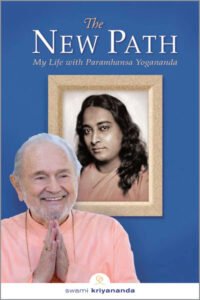
Blessed Are the Pure in Heart
Blessed Are the Pure in Heart This was first published in December, 2019. It’s especially relevant to those who practice yoga and meditation using techniques.